When it comes to managing body weight—whether you’re trying to lose fat, maintain a healthy weight, or simply better understand your body—stepping on the scale each day may be one of the simplest yet most effective habits you can develop. While some may argue that this creates (or is indicative of) an unhealthy relationship with your body, daily weighing – when approached with the right mindset – can be an empowering tool that fosters self-awareness, healthy body image, and long-term success.
The Evidence: More Weighing, More Weight Loss
Multiple studies have shown a strong correlation between frequent self-weighing and successful weight management. A 2015 study published in the Journal of the Academy of Nutrition and Dietetics found that individuals who weighed themselves daily lost significantly more weight over a 6-month period than those who did not. In fact, the frequency of weighing was one of the strongest predictors of weight loss success in the study. Another study from the Journal of Behavioral Medicine looked at college students and found that those who weighed themselves daily experienced significant reductions in body fat percentage over time.
The underlying reason is simple: more frequent feedback allows for more timely adjustments. Just as you wouldn’t drive across the country without checking your GPS occasionally, managing weight without regular self-monitoring increases the chance of veering off course without noticing.
The Power of More Data
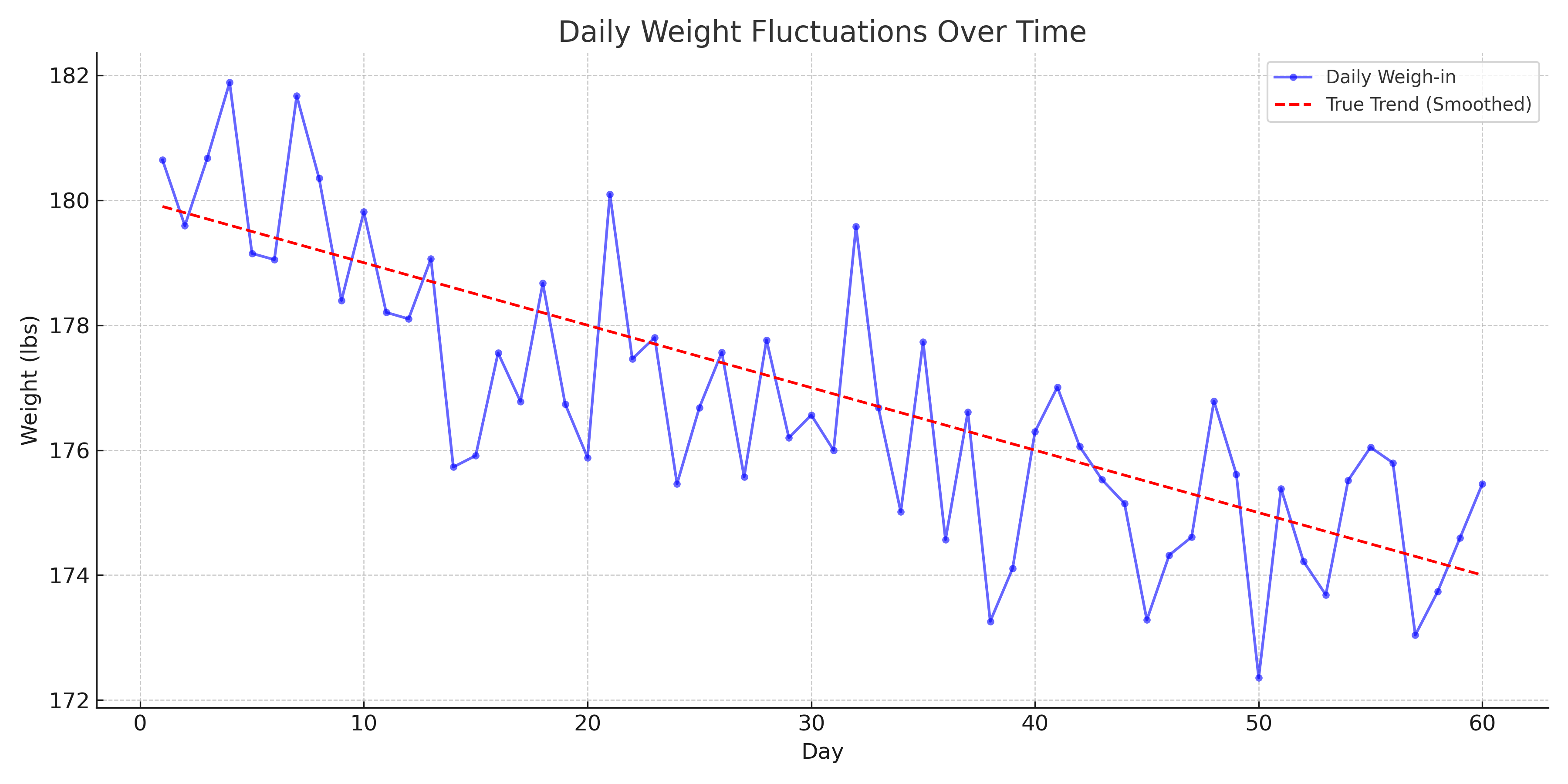
Daily weighing gives you a clearer picture of trends rather than isolated snapshots. Body weight naturally fluctuates from day to day due to factors like water retention, sodium intake, menstrual cycles, stress, and even bowel movements. If you only weigh once a week and it happens to be on a high day, you might feel discouraged. Alternatively, you could catch a low day and falsely assume that all is going well, only to be surprised later.
By weighing daily, you begin to see patterns. For example:
- A salty meal may cause a spike the next day.
- A high-carb day can lead to more water retention.
- A workout may cause a temporary gain from muscle glycogen or inflammation.
More data smooths out these short-term blips and reveals the long-term trajectory. You can make informed decisions rather than reacting emotionally to isolated results.
Ending the Anticipation–Disappointment Cycle
One of the paradoxes of weighing less often—weekly or monthly—is that each weigh-in carries more emotional weight. You build up anticipation for that number, and if it doesn’t reflect your expectations, it can feel disproportionately disappointing or confusing. Daily weighing reduces this tension. Because it becomes routine, the number loses some of its emotional sting and becomes just another data point.
In fact, people who have struggled with emotional reactions to the scale can benefit greatly from daily weighing—not because it magically fixes mindset issues, but because regular exposure desensitizes the emotional response over time. Like any tool, the scale’s impact is shaped by how we use it. When it’s seen as feedback rather than judgment, the number becomes informative rather than punitive.
Staying in Control During Maintenance
Perhaps even more compelling is the role daily weighing plays in weight maintenance, which is often more challenging than weight loss itself. Research, including findings from the National Weight Control Registry, shows that individuals who have successfully maintained significant weight loss are far more likely to weigh themselves regularly.
Daily weighing during maintenance helps detect small upward trends early—before they become significant gains. It’s far easier to course-correct when you’ve gained two pounds than when it has crept up to ten. This proactive approach can prevent the all-too-common yo-yo dieting cycle.

Daily weighing, when done with a data-focused mindset, can be a powerful strategy for both weight loss and long-term maintenance. It:
- Encourages consistent accountability
- Helps identify trends and correlations with food, sleep, and exercise
- Reduces emotional volatility compared to less frequent weigh-ins
- Provides more data, leading to better decisions
- Empowers long-term success by making weight changes more predictable and manageable
Rather than avoiding the scale, consider making it your ally. Let it be a mirror, not a judge—offering objective feedback so you can adjust your behavior, stay on track, and better understand your body. As the saying goes, “What gets measured gets managed.”
 ThinkWell Nutrition Coaching
Leave a comment